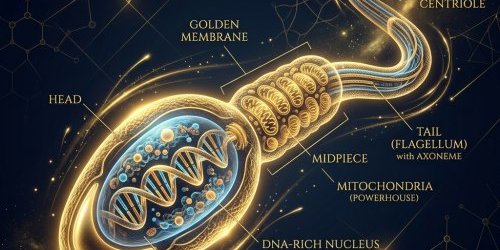
يتم تشخيص مسخ النطاف (Teratozoospermia) عندما تنخفض نسبة الحيوانات المنوية ذات الشكل الطبيعي في القذف عن **4%** وفقًا لمعايير كروجر الصارمة. تؤدي التشوهات الهيكلية إلى فقدان القدرة على الحركة الصحيحة واختراق البويضة.
تصنيف تشوهات الحيوانات المنوية:
- تشوهات الرأس: رأس غير متبلور، أو مستدق، أو مستدير تماماً (الرأس المستدير الخالي من الأكروسوم)، مما يمنع اندماج الجينات مع البويضة.
- تشوهات العنق والقطعة الوسطى: عنق منحني، أو قطعة وسطى سميكة أو مكسورة، مما يعوق عمل الميتوكوندريا وإنتاج الطاقة.
- تشوهات الذيل: ذيل ملفوف، قصير، أو مزدوج، مما يمنع الحركة التقدمية المستقيمة.
الأسباب الخلوية الرئيسية:
1. الطفرات الجينية: مثل جين DPY19L2 المسبب لتشوه الرأس المستدير (Globozoospermia).
2. خلل تغليف الحمض النووي (DNA): يتسبب الإجهاد التأكسدي أثناء عبور البربخ في اضطراب عملية استبدال الهستونات بالبروتامينات، مما يترك المادة الوراثية عرضة للتلف الهيكلي.
3. الاحتباس الحراري داخل الصفن: مثل دوالي الخصية التي ترفع درجة الحرارة الموضعية وتعيق تكوين قبعة الأكروسوم.
كيفية قراءة شكل الحيوانات المنوية في التقرير (معايير كروجر):
| مؤشر الشكل (Morphology) | قيمة كروجر المرجعية الصارمة | التفسير التشخيصي في المختبر |
|---|---|---|
| الأشكال البيضاوية الطبيعية | ≥ 4.0% | أقل من 4% يؤكد وجود مسخ النطاف (Teratozoospermia) |
| مؤشر مسخ النطاف (TZI) | < 1.6 | أكبر من 1.6 يشير لوجود عيوب متعددة في نفس الحيوان المنوي |
| سلامة الأكروسوم (Acrosome) | يغطي 40–70% من رأس الحيوان المنوي | غياب الأكروسوم يؤكد تشوه الرأس المستدير (Globozoospermia) |
الفحوصات السريرية الموصى بها:
- تقييم كروجر الصارم: صباغة الخلايا المجهرية لرؤية تفاصيل الرأس والذيل بتكبير 1000x.
- تفتت الحمض النووي (DFI): لمعرفة ما إذا كانت التشوهات الخارجية مرتبطة بتلف وراثي في النواة.
- التحليل الجيني المتقدم: فحص جينات DPY19L2 عند تشخيص تشوه الرأس المستدير الكامل.
البروتوكولات العلاجية الطبيعية:
تستجيب حالات التشوه المتغيرة بشكل ممتاز للمكملات الغذائية ومضادات الأكسدة القوية. يساعد الزنك عالي الجرعة، والفولات، والليكوبين، وفيتامين C في تنظيم عملية Protamination لحماية الحمض النووي والحفاظ على الشكل الطبيعي للحيوان المنوي.