
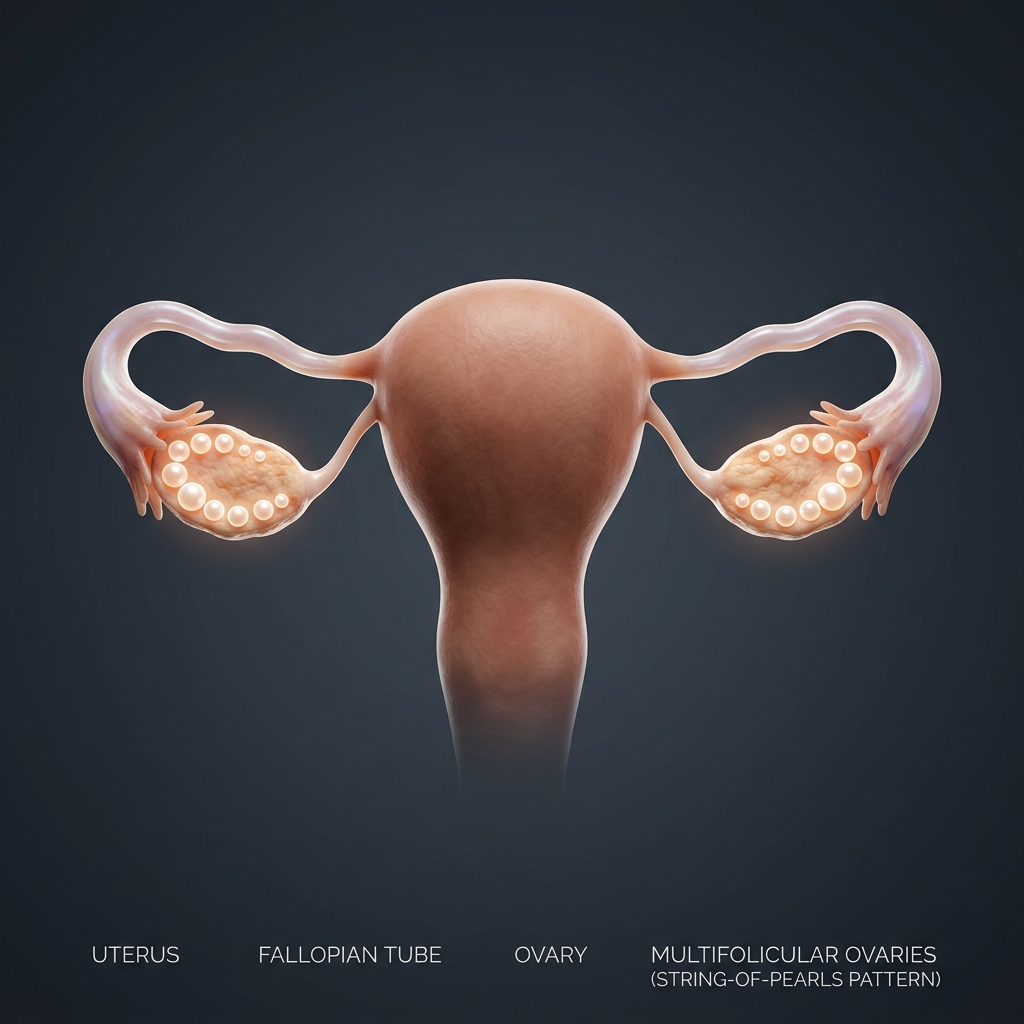
1. Definition and Hormonal Feedback Loops
Endocrine Infertility refers to reproductive failure resulting from disruptions along the Hypothalamic-Pituitary-Ovarian (HPO) Axis, leading to anovulation (failure to release an egg) or dysovulation (irregular, suboptimal follicular development). Hormones must be secreted in precise amounts and pulsatile patterns to coordinate follicular recruitment, dominant follicle selection, estrogen production, the mid-cycle LH surge, and subsequent corpus luteum progesterone release.
               HYPOTHALAMIC-PITUITARY-OVARIAN (HPO) AXIS
                                  │
                                  ▼
                    Hypothalamus (GnRH Pulses)
                                  │
                                  ▼
                  Anterior Pituitary (FSH & LH)
                                  │
                                  ▼
                         Ovaries (Follicles)
                                  │
            ┌─────────────────────┴─────────────────────┐
            ▼                                           ▼
  Estrogen (Estradiol E2)                    Progesterone (Luteal Phase)
            │                                           │
            └───────────── Negative / Positive ─────────┘
                           Feedback Loops
2. Etiology & Spectrum of Endocrine Ovulatory Disorders
According to the World Health Organization (WHO) classification:
- Group I: Hypogonadotropic Hypogonadal Anovulation (Hypothalamic Amenorrhea): Low/normal FSH/LH and deficient Estradiol (triggered by extreme exercise, severe caloric restriction, stress, or Kallmann syndrome).
- Group II: Normogonadotropic Normoestrogenic Anovulation (Most Common — ~85%): Normal baseline gonadotropins with disordered feedback—predominantly Polycystic Ovary Syndrome (PCOS).
- Group III: Hypergonadotropic Hypogonadal Anovulation (Premature Ovarian Insufficiency): Markedly elevated FSH/LH with depleted ovarian follicular reserves.
- Group IV: Hyperprolactinemic Anovulation: Elevated prolactin inhibiting hypothalamic GnRH pulsatility.
3. How to Read Your Hormone Blood Report: Reference Ranges & Clinical Interpretation
| Biomarker | Ideal Testing Time | Normal Reference Range | Diagnostic Interpretation in Infertility |
|---|---|---|---|
| FSH (Follicle-Stimulating) | Day 2–3 of Cycle | 3.5 – 10.0 mIU/mL | > 10–12 mIU/mL: Diminished ovarian reserve; > 25–40: Ovarian insufficiency; < 2.0: Hypothalamic failure |
| LH (Luteinizing Hormone) | Day 2–3 of Cycle | 2.0 – 8.0 mIU/mL | Elevated baseline LH resulting in LH:FSH ratio > 2:1 or 3:1 is classic for PCOS. |
| Estradiol (E2) | Day 2–3 of Cycle | 25 – 60 pg/mL | > 80 pg/mL: Artificially masks elevated baseline FSH due to early follicular recruitment. |
| Anti-Müllerian Hormone (AMH) | Any day of Cycle | 1.5 – 4.0 ng/mL | < 1.0 ng/mL: Low ovarian reserve; > 4.5–10+ ng/mL: High antral follicle count, classic for PCOS. |
| Serum Progesterone (P4) | Day 21 (Mid-Luteal) | > 10 ng/mL (Natural) / > 15 ng/mL (Induced) | < 3 ng/mL: Anovulation (no oocyte released); 3–9 ng/mL: Inadequate luteal phase support. |
| Serum Prolactin | Fasting, Morning | 4.0 – 25.0 ng/mL | > 25–100+ ng/mL: Hyperprolactinemia suppresses GnRH; > 100: High suspicion for Pituitary Microadenoma. |
| TSH (Thyroid-Stimulating) | Any day of Cycle | 0.4 – 4.0 mIU/L | Optimal fertility preconception target: < 2.5 mIU/L (Subclinical hypothyroidism impairs implantation). |
| Fasting Insulin & HOMA-IR | Fasting | Insulin: < 10 µIU/mL / HOMA-IR: < 2.0 | > 2.5: Insulin resistance driving hyperandrogenism and anovulation. |
4. Polycystic Ovary Syndrome (PCOS): Rotterdam Diagnostic Criteria
Diagnosis requires at least two of the following three features:
- Oligo- or Anovulation: Infrequent (> 35 days) or absent menstrual cycles.
- Clinical or Biochemical Hyperandrogenism: Hirsutism (Ferriman-Gallwey score ≥ 8), severe inflammatory cystic acne, androgenic alopecia, or elevated serum free testosterone.
- Polycystic Ovaries on Ultrasound: ≥ 20 small follicles (2–9 mm diameter) per ovary ("string of pearls" appearance) or an increased ovarian volume > 10 mL.
5. Pharmacological Protocols for Ovulation Induction
- Letrozole (Femara) — First-Line Treatment for PCOS: Aromatase inhibitor that blocks estrogen biosynthesis, causing a transient central hypoestrogenic state that stimulates pituitary FSH release. Dosage: 2.5 mg daily from cycle day 3 to 7; titrate up to 5.0 mg or 7.5 mg if anovulatory.
- Clomiphene Citrate (Clomid): SERM that blocks hypothalamic estrogen receptors, triggering endogenous GnRH and FSH secretion. Dosage: 50 mg to 150 mg daily for 5 days starting on cycle day 3 or 5.
- Exogenous Gonadotropins (rFSH / hMG): Direct daily subcutaneous injections for resistant anovulation; requires rigorous serial ultrasound tracking to avoid Ovarian Hyperstimulation Syndrome (OHSS).
- Metformin Adjuvant: Insulin sensitizer administered at 1500–2000 mg/day; reduces peripheral hyperinsulinemia and decreases ovarian androgen synthesis.
6. Frequently Asked Questions (FAQ)
Q1: Does a high AMH level mean I am extremely fertile?
While a high AMH (> 4.5 ng/mL) indicates abundant egg reserves, excessively high AMH is characteristic of PCOS, where eggs remain arrested in immature stages and fail to ovulate spontaneously.
Q2: What is the ideal day to test Day 21 Progesterone if my cycle is 35 days?
The Day 21 test assumes a classic 28-day cycle with ovulation on Day 14. If your cycle is 35 days, ovulation occurs around Day 21, so mid-luteal progesterone testing should be performed on Day 28 (7 days prior to expected menses).